AI Focused Blog
Explore insights, trends, and expert perspectives on the evolving world of artificial intelligence.
Posts — page 4

AI leadership in financial services is essential for managing AI risk. Unlike traditional risk management, AI risk must be integrated into the operating model due to its rapid evolution and significant impact on business operations. When AI models impact credit decisions, fraud outcomes, trading behaviors, and customer interactions, any oversight can pose existential risks, including trust and regulatory compliance. Many financial institutions mistakenly add AI risk controls to outdated models that can't keep pace with AI's dynamic nature. Effective AI leadership necessitates a disciplined approach with clear decision rights, enforceable standards, and scalable governance practices. Leaders who excel in AI aren't simply using it; they're operationalizing it safely and broadly. AI risk is unique to financial services due to its scale, adaptive behavior, and regulatory sensitivities. It requires a shift from traditional model risk management to AI risk management across six categories: model, data, conduct, operational resilience, cyber, and third-party risks. This involves continuous monitoring and accountability. Governance must execute decision rights, risk tiering, and maintain an audit-ready AI inventory. Effective AI risk management aligns with existing controls, avoids creating separate compliance structures, and incentivizes accountable leadership. Institutions adept at managing AI risk will achieve faster, more reliable AI deployment, distinguishing themselves in a competitive market.

In the realm of financial services, AI leadership is emerging as a critical factor for operational success. The key lies in scaling operations with AI while minimizing risk. Traditional methods have become insufficient as organizations face increasing operational costs, regulatory scrutiny, and customer demands for digital experiences. AI is transforming how financial firms operate by shifting tasks from humans to systems and decisions from intuition to governed intelligence. For firms to succeed, they must implement AI as an integral operating model, emphasizing decision products, straight-through processing, and intelligent exceptions. This approach ensures efficiency and strengthens compliance and control mechanisms. Proper AI governance—monitoring, validation, and risk management—must be established from the outset. Adopting AI in financial services is not about replacing human roles but enhancing them through intelligent augmentation, allowing professionals to focus on complex exceptions. Successful AI integration depends on robust data and decision infrastructure, ensuring reliable and timely insights. By investing in operational data products and decision telemetry, firms can achieve sustainable AI scaling. Ultimately, AI leadership demands strategic investment in infrastructure and governance, driving efficiency without compromising risk management. This new paradigm offers a pathway to operational excellence and competitive advantage in financial services.

AI Leadership in the financial services sector is transforming as it moves beyond pilot projects to become a core part of a company's governance and operating model. For sectors like banking, insurance, and capital markets, the integration of AI means navigating regulatory constraints, managing model risks, and maintaining cybersecurity measures. Effective AI leadership involves not just selecting the right technologies but building an operating framework that enables scalable, compliant, and profitable AI deployment. Financial services leaders need to align people, processes, and data to unlock AI's potential and transform it into a repeatable capability. To achieve this, businesses must redefine their operating models, focusing on decision-making processes, risk management, and economic understanding. AI's role in enhancing customer and advisor experiences, managing risk and fraud, and improving operational productivity is crucial. Leaders should adopt a "data products" mindset and ensure their platforms are equipped with robust AI and LLMOps capabilities. Governance should be integrated with risk management, ensuring that AI innovations are controllable and compliant. By creating cross-functional teams and focusing on metrics that matter, financial institutions can accelerate AI adoption and achieve sustainable competitive advantages.

AI Leadership in education is transforming how institutions operate, moving beyond simply adopting AI tools to reshaping processes and outcomes. As AI emerges as a new operating model, it impacts decision-making, service delivery, and the maintenance of trust with all stakeholders. Institutions are often bogged down by non-scalable pilots and anxiety over academic integrity, while students and faculty advance independently. Effective AI Leadership involves adhering to a disciplined approach that integrates people, processes, and intelligent systems, ensuring AI initiatives align with mission outcomes such as student success and operational resilience. AI implementation in education requires governance that balances speed and safety, addressing unique concerns like FERPA compliance and accessibility. Institutions must initiate AI projects with clear objectives, grounded in well-defined student and institutional goals. Building a centralized governance backbone prevents shadow AI and ensures consistent, secure practice. Strategic AI use should encompass quick wins and long-term projects that reengineer workflows for enhanced human and AI collaboration. Successful AI Leadership demands robust vendor management, leveraging contracts to secure data, privacy, and accessibility. The focus should be on outcomes, equity, and continuous measurement, ensuring AI initiatives improve student experiences without compromising trust. Aligning AI with educational goals will shape future expectations in personalization and efficiency.

AI Leadership in Education: Modernizing Legacy Systems Education faces challenges such as budget constraints and evolving expectations for digital services. Legacy systems like student information and learning platforms were designed to record transactions rather than facilitate decision-making at scale. This creates a mismatch in meeting the demand for personalized support and efficient services. Here, AI leadership becomes crucial, focusing on modernizing these systems with AI while ensuring governance. Legacy modernization isn't just an IT task but an institutional overhaul. Data fragmentation and poor governance can lead to AI providing inaccurate results. Successful modernization aligns people, processes, and data while prioritizing responsive service, student success, and compliance. AI-ready education architecture involves decoupling decision-making layers from transaction systems, enhancing data quality, and ensuring secure, consent-aware data access. Institutions must establish governance models, monitor AI risks, and ensure vendor compliance. A practical modernization approach involves short- and long-term strategies, such as implementing integration layers and improving workflows. Use cases such as AI-enabled service desks and advisor co-pilots can deliver quick wins and justify modernization efforts. AI leadership in education is about executing discipline and turning AI into improved services, outcomes, and governance, ensuring a responsive and future-ready educational environment.

In financial services, AI transformation is crucial for leading without compromising trust or regulatory compliance. AI Leadership differentiates successful firms by embedding intelligent systems into decision-making and operational processes. Firms that treat AI as an upgrade risk accumulating technical debt, while those with disciplined governance compress cycle times and enhance customer outcomes. Effective AI Leadership involves aligning people, processes, data, and decision-making to integrate AI safely and efficiently. This requires transitioning from experiments to a mature AI operating model, treating AI as a product portfolio, standardizing production pathways, and embedding risk management early in the process. Governance is vital, especially with generative AI introducing new risks such as data leakage and unpredictable behavior. Leaders should modernize governance frameworks to address these challenges and make accountability explicit. Data readiness is also pivotal, emphasizing trusted, governed data over storage. Institutions should focus on high-value use cases that are decision-intensive and measurable, ensuring AI programs demonstrate operational impact. AI Leadership requires a robust delivery engine, cross-functional teams, and investment in MLOps. Change management is essential to align workflows and training with AI capabilities. By running AI as a critical business system, firms can balance value, risk, and reliability, ensuring sustainable transformation.

AI leadership in financial services is becoming critical as institutions move beyond pilots and innovation labs. The key to AI advantage lies in a robust AI strategy that reshapes decision-making, risk management, and capital allocation. Financial firms, with their rich data and regulatory environment, find AI both valuable and risky. AI leadership demands executives who can strategically choose AI applications, govern them with precision, industrialize their deployment, and integrate human-system roles seamlessly. Building an AI strategy starts with a clear "AI Advantage Thesis," focusing on value, differentiation, constraints, and time horizons. Leaders must translate this into actionable “arenas,” such as decision-making, crime prevention, client experience, and operational efficiency. A well-designed operating model is essential, requiring clear decision rights and a product-oriented AI delivery framework. Data quality and governance are crucial, especially with generative AI, where data risks must be managed meticulously. An effective AI strategy includes a balanced portfolio that delivers immediate ROI and builds long-term capabilities. Governance should be tiered and automated to enable scalability without compromising risk standards. Ultimately, AI leadership in financial services means embedding intelligent systems into organizational fabric, supported by strategic roles, incentives, and AI literacy. Firms that achieve this will lead the industry into the future.

AI leadership in education is transforming the landscape by aligning intelligent systems with institutional goals. As education undergoes rapid changes, effective AI leadership becomes crucial for optimizing outcomes, equity, privacy, safety, and trust. Institutions that integrate AI as an operational shift can achieve benefits like faster instructional iteration and reduced administrative burdens. To succeed, institutions must prioritize an AI strategy focused on specific outcomes such as student success, educator capacity, and operational performance. Building a robust operating model involves establishing clear governance, data readiness, and responsible AI practices. This includes managing data interoperability, defining privacy controls, and implementing risk-based governance. AI in education is not merely about adopting new technologies but about fostering an environment where AI augments human capabilities while safeguarding integrity and equity. High-value AI applications should focus on improving educator workflows and student intervention timeliness. Procurement becomes integral to governance with strict vendor evaluations. Continuous measurement of learning outcomes, operational improvements, and risk management ensures that AI strategies remain effective and aligned with educational goals. Ultimately, disciplined AI leadership, not just technology adoption, will drive meaningful changes in education, making it more responsive and resilient.

2025 was a year of explosive progress, fierce model competition, and rising uncertainty. This article breaks down the key developments—and what they signal for the next phase of AI in 2026.
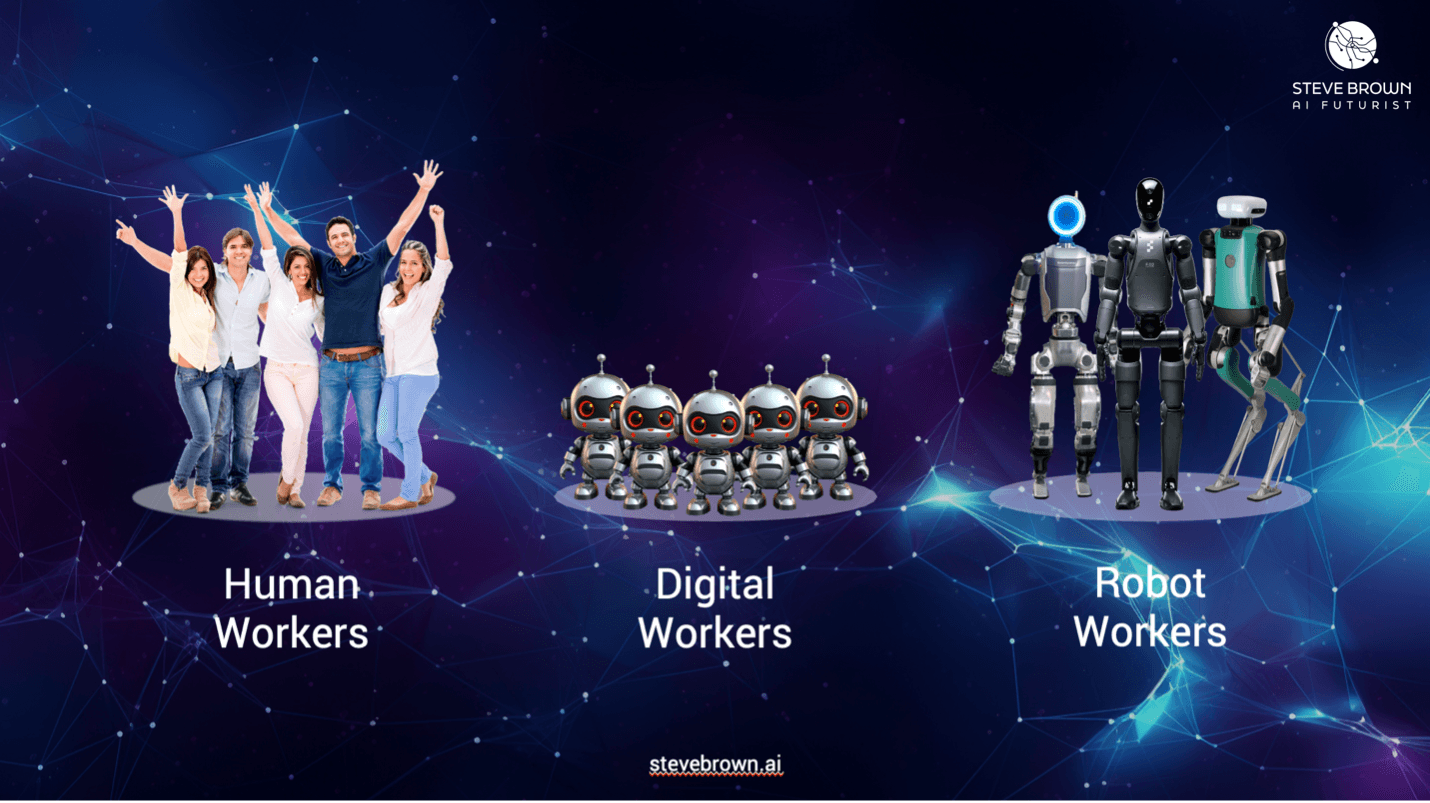
For much of 2024, the buzz was about so-called ‘agentic AI,’ the field of AI in which models have agency, which means they can use tools to complete tasks. Agents will come of age in 2025, and deployments will soon begin at scale. Many have declared this year to be the year of agents. In this post, I’ll review why that’s the case, what types of agents are coming, and the implications for the future of work in 2025 and beyond.

Here are some thoughts on R1, the model that’s got everybody’s panties in a bunch. I’ve written it in simple bullet points to make it easier to consume and easier for me to write quickly. I explore what R1 means for the AI marketplace and how much significance we should give to the moment. Spoiler alert: I think the market’s response on January 27th was a major overreaction.

AI technology continues to improve, often exponentially. It’s evolved from pattern matching, prediction, and recommendation engines to sophisticated agents capable of meaningful conversation and performing reasonably complex tasks. With each advancement, AI inches closer to becoming an integral part of our daily lives, not just as assistants but as researchers and collaborators. The change has enormous implications for users, content creators, advertisers, and the multi-billion-dollar search engine optimization (SEO) business.

Will AI and automation eventually lead to mass unemployment? If AI does most of the work, will people still feel motivated to seek a high-quality education or education of any kind? Will the role of education change in a post-labor world? Could a decline in people’s education use lead to humanity's atrophy? These are some of the questions I plan to explore in this post. My recent posts have been about AI in education. This time, let’s talk about how AI could ultimately change the entire focus of our educational system.

Our education system desperately needs a major overhaul. Today’s system costs way too much, is unavailable to some who need it and doesn’t teach students the skills they will need to succeed in the future workplace. AI in education is about to change that.

If we designed our education system from scratch today, it would look radically different from the antiquated, expensive, slow, and often stuffy system we have. As an AI futurist, I spend time researching and thinking about the future of work, education, and society. The question we must ask ourselves is not only what will happen when we put AI in education but what needs to change in our education system to prepare for AI and society in the future.
Keynote Speaker.
Understand what AI really means for your business and how to build AI-first organizations. Get expert guidance directly from Steve Brown.