AI Articles
63 articles on AI from Steve Brown.
Recent blog post

The post delivers an AI leadership playbook and AI transformation strategy for building an AI-first enterprise, from AI tools and agents to digital employees and self-improving systems.

Large language models were the first act. World models, reasoning systems, and agentic AI are reshaping enterprise AI strategy now.

The case for AI data centers, grounded in facts. See what the numbers really say about water, energy, jobs, tax revenue and community impact.

Recursive self-improvement could become one of the most important forces shaping the next phase of AI, with major implications for business leaders. This post explains how AI is already helping improve the entire technology stack — from energy and chip design to data centers, models, applications, science and engineering — creating powerful feedback loops that could accelerate AI progress even further. For business leaders, the implications are profound: faster capability cycles, shorter planning horizons, greater pressure to preserve strategic flexibility, and a growing premium on building organizations that can learn and adapt as quickly as the technology itself.

Cloud AI isn’t disappearing—it’s spreading. Discover how edge AI, local agents, robots, and autonomous systems will reshape business, expand the AI market, and lead to the rise of the digital employee in a box.

Enterprise AI strategy is more than choosing a model provider. Learn how to build an intelligence portfolio optimized for cost, control, performance and competitive advantage.
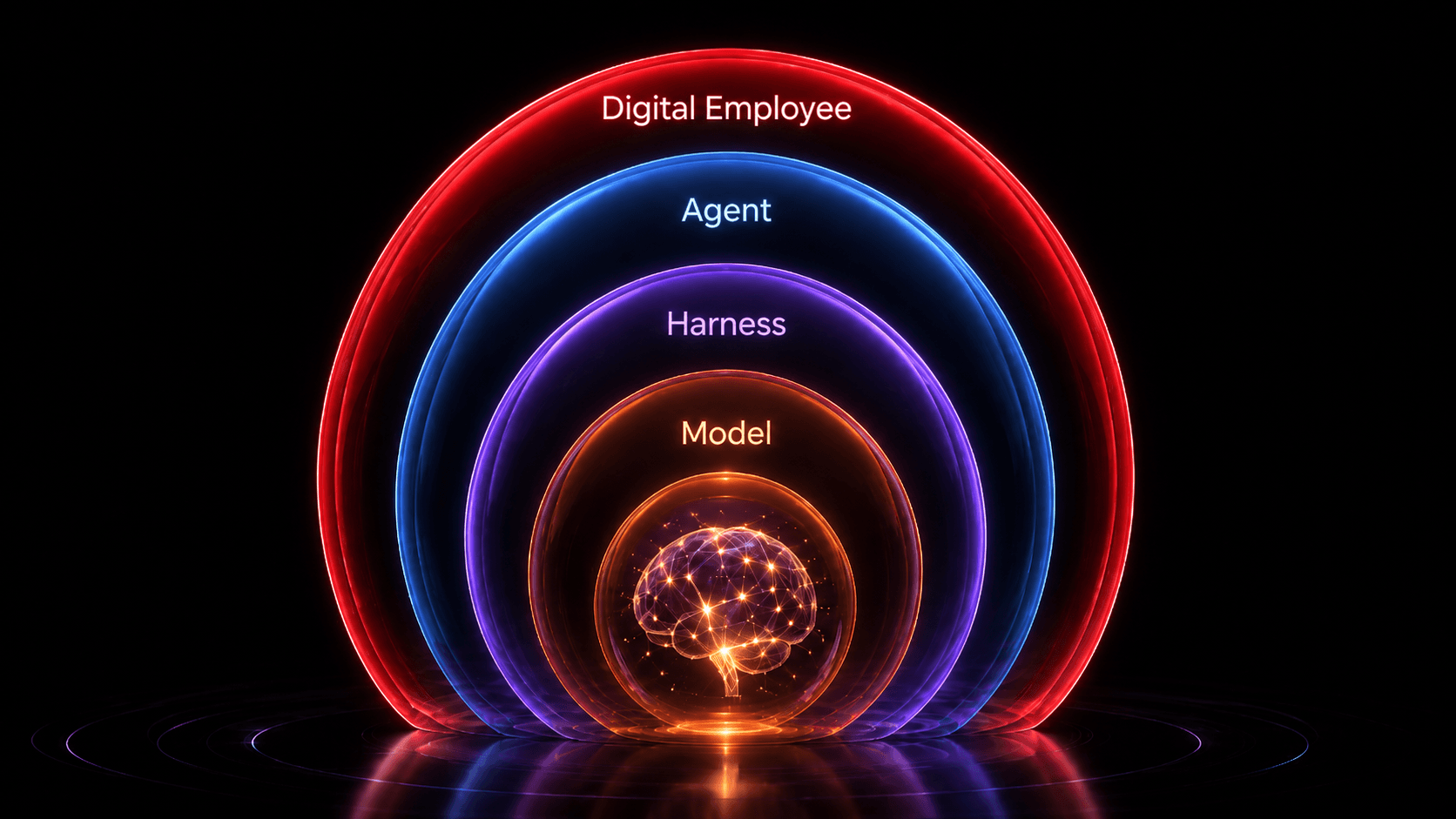
Understand the layers of enterprise AI—from models and routers to harnesses, agents, and digital employees—what each adds to the business, and why each layer increasingly becomes a leadership responsibility.

Most AI strategies optimize the past. Learn the four-step AI-First Competitor Test leaders can use to reinvent their business before a smarter rival does.

Discover the new division of labor in an AI-first organization—what AI should do, what people must lead, and how self-improving enterprises win.

AI token costs are rising, but the answer isn’t to slow down. Learn why business leaders need good-enough AI and smarter model allocation.

Discover how AI-first organizations use digital employees, intelligence flywheels, synthetic customers, and AI operating systems to build self-improving enterprises and gain competitive advantage.

AI presents leaders with two paths: use it to cut labor and optimize the past, or amplify people, scale output, create new value, and invent the future. This post explains why an abundance mindset—not incremental cost reduction—will define the companies that win in the AI era.

What does it really mean to become an AI-first organization? This piece breaks down the shift from using AI tools to making AI the engine of your business—and what’s at stake if you don’t.

Most companies are adding AI to existing workflows. The leaders are rebuilding their businesses around it. This article explains the shift from digital-first to AI-first—and why it changes everything.

AI may move humanity from the Labor & Industry era into an Era of Abundance, where work becomes increasingly optional. But the bridge from here to there will not build itself. This post explores the economic models that could help society make the transition safely, from UBI and universal services to worker equity, AI sovereign wealth funds, and new forms of shared ownership.

The future of AI in financial services hinges on deploying AI responsibly at scale while maintaining risk control, compliance, and trust. As the industry evolves, AI moves from mere prediction to decision support and process orchestration, elevating it from model risk to business risk. Institutions that establish governed AI factories will enhance productivity and market speed, while those that overlook responsible AI will face slowdowns due to compliance and reputational issues. Responsible AI is a go-to-market enabler, reducing delays in model reviews and compliance work. Regulatory convergence, model supply chain risk, and AI's impact on customer interactions underscore the urgency for governed AI systems. This involves integrating model risk management, operational controls, cybersecurity, compliance, and data governance into a cohesive delivery framework. Transitioning from AI projects to a comprehensive AI-enabled operating model is crucial. An AI factory with standardized processes and embedded governance can streamline delivery and reduce costs. Key areas for immediate responsible AI application include customer service, fraud prevention, credit underwriting, and wealth management. Executives must prioritize shared platforms, align incentives for responsible outcomes, and ensure AI deployments are secure and trustworthy. Leading in the future of AI means consistently safe, scalable deployments, transforming AI from a risk into a competitive advantage.

The future of AI in education is transforming planning approaches for institutions, aligning more closely with the rapid evolution of job roles. This shift is less about technology adoption and more about redefining education's operating model to enhance learning design, outcome measurement, and workforce alignment. Traditional approaches to curriculum updates and workforce integration are now obsolete as AI accelerates task automation and changes the landscape of entry-level jobs. Institutions must establish AI-ready systems that adapt quickly to industry demands and personalize learning experiences while maintaining trust. Embracing AI means shifting from content delivery to capability-building, focusing on skills like critical thinking and ethical reasoning. The traditional semester cycle must give way to continuous adaptation as skill relevancy shrinks. Education must evolve to task-based curriculum design, emphasizing AI fluency and verification capabilities. Leaders must make strategic decisions, such as building AI-native curriculums, scaling work-integrated learning, and redefining productivity through AI. Governance, risk management, and trust-building are essential to ensuring AI deployments are safe and effective. Ultimately, institutions that adapt their operating models to these changes will thrive in the AI-driven future of work.

The Future of AI in education is poised to revolutionize how institutions operate by embedding AI deeply into daily processes rather than restricting it to isolated projects. This shift will enable educational systems to manage rising expectations, tight budgets, and diverse learner needs by improving consistency, responsiveness, and decision-making without compromising trust and integrity. As operational needs expand, organizations must focus on AI as a capability layer to enhance service and decision quality while protecting privacy. Success in the Future of AI in education will come from integrating AI into scalable operations, targeting high-volume, repeatable tasks like student services, admissions, and resource scheduling. Institutions should prioritize operational outcomes, redesign processes, ensure data readiness, and establish governance to harness AI’s full potential. By focusing on these areas, educational leaders can address capacity leaks in fragmented workflows, service quality variance, and compliance loads. Key strategic elements include designing AI-ready workflows, ensuring robust governance, and fostering transparency. By treating AI as an operational model shift rather than a mere tool upgrade, institutions will achieve heightened efficiency, freeing up capacity for educational growth and opportunity, ultimately outperforming counterparts who treat AI as a series of standalone experiments.

The future of AI in financial services hinges on effective integration into daily operations, rather than isolated advancements in labs. Financial institutions must seamlessly incorporate AI across diverse areas such as product teams, risk, compliance, and frontline functions. Treating AI as mere experiments leads to fragmented results and increased risks. Instead, successful competitors will harness AI to reduce costs, improve decision-making, and enhance customer experiences. The true value of AI lies in empowering faster, better decisions, impacting areas like credit policy, fraud reduction, and operational resilience. This requires an end-to-end system with integrated data pipelines, consistent policy constraints, and human oversight. Teams must align on shared data foundations, delivery patterns, and governance to scale effectively. Key integration moves include building a decision inventory, establishing a governed AI platform, using a hub-and-spoke model, and incorporating model risk management into delivery processes. Human-AI handoffs should be carefully designed to ensure safe delegation and operational resilience. Ultimately, the future belongs to those institutions that treat AI integration as an operating model redesign, enabling AI to become a strategic advantage rather than a collection of experimental solutions.

The future of AI in manufacturing is more about redefining the operating model than technological advancements. The key lies in integrating AI into decision-making processes to enhance throughput, yield, and efficiency while maintaining safety and reducing risks. Successful manufacturers will embed AI into core operations rather than treating it as an isolated tool. This article outlines a strategic AI roadmap for manufacturers, emphasizing critical decision loops such as asset reliability, quality assurance, and production scheduling. The future of AI involves moving from mere data analytics to actionable decisions, creating connected value chains, and treating data as a critical asset. A robust AI strategy should focus on measurable outcomes, reinforced by strong governance and lifecycle management. It requires a structured approach, prioritization of standardized patterns, and a hybrid architecture that integrates both cloud and on-premise solutions. Manufacturing leaders should aim to build AI capabilities that are scalable and sustainable, employing a federated team model that ensures accountability and continuous improvement. The success of AI will be measured through operational efficiency, system health, and risk management metrics. Ultimately, the future of AI in manufacturing demands an operating model that embeds AI seamlessly into daily operations, ensuring long-term reliability and value.

AI risk has evolved into a core concern for technology companies, becoming a fundamental aspect of product and enterprise risk management. With AI embedded in various facets of software development and application, managing AI risks is critical for scaling effectively. Leaders who treat AI risk as an opportunity to enhance their operating model will gain a competitive edge, while those who view it merely as a compliance issue may face continuous challenges. Key AI trends reshaping the risk landscape include the shift from model risk to system risk, the adoption of open-source models, and the rise of multimodal AI, each altering how systems interact with data and users. Additionally, retrieval-augmented generation (RAG) and growing regulatory requirements underscore the need for robust AI governance and security strategies. This article provides a roadmap for technology executives to manage AI risk effectively. By adopting a comprehensive approach that includes tiered use-case classifications, lifecycle controls, and enhanced security measures, companies can build a resilient AI risk management architecture. This framework enables swift adaptation to emerging trends, facilitating operational trust and leveraging AI capabilities as a sustainable competitive advantage.

The education sector is experiencing a transformative phase due to AI adoption, shifting from isolated projects to a foundational change in learning processes. Key AI Trends are affecting content creation, instructional speed, and assessment credibility. For institutional leaders, the challenge is embedding AI into core operations such as tutoring, lesson planning, and analytics, moving beyond mere tool acquisition to developing a robust AI operating model. Winning institutions in the next five years will focus on effective AI governance and strategic integration, rather than simply pioneering AI use. This involves redesigning educational workflows, ensuring that AI-enhanced tools contribute to genuine learning improvements, and maintaining academic integrity. Significant AI Trends include the integration of AI into existing workflows, agentic AI capable of complex tasks, and multimodal AI enhancing content accessibility and quality. Moreover, on-device AI brings privacy benefits but introduces compatibility challenges. Institutions must also address regulatory changes and streamline operations to remain competitive. Leaders must evolve their strategies to focus on governance, trusted data, and adaptive processes, ensuring staff are equipped to thrive in AI-enhanced environments. A clear, actionable approach within a 90-day window is essential, prioritizing high-impact use cases to drive sustainable, institution-wide AI integration.

Manufacturing leaders are witnessing AI's evolution from isolated proofs-of-concept to powerful systems that enhance throughput, quality, safety, and customer responsiveness. However, many organizations treat AI as a mere technological deployment rather than a transformative shift in their operating model, leading to trapped value. The most significant AI trends in manufacturing are not just about new algorithms but involve redesigning workflows, decision-making, and performance management with embedded intelligent systems. An "AI-ready culture" is essential, as it serves as the foundation for scaling AI’s benefits. Key trends reshaping manufacturing include generative AI moving into engineering and operations, edge AI improving in-line intelligence through computer vision and robotics, and the maturation of industrial data platforms. Agentic AI is emerging, moving from decision support to execution, while governance and safety are becoming central operational constraints. To harness AI's full potential, companies must foster an AI-ready culture emphasizing data discipline, cross-functional collaboration, and clearly defined decision rights. Leaders should integrate AI into core operational systems and create an environment where AI is trusted, adopted, and improved. By embedding AI into their operating models, manufacturers can gain a significant competitive advantage, leveraging AI trends to enhance efficiency and resilience.

The media and entertainment industry is being reshaped by AI, with intelligent systems revolutionizing content creation and distribution. Embracing key AI trends is now a necessity for companies to stay competitive. Leaders must operationalize AI quickly and securely, maintaining creative integrity, IP, and brand trust. The key is to embed AI in workflows to enhance development, production, and monetization. To capitalize on AI trends, organizations should focus on making AI a robust, repeatable capability. This involves several strategic moves: targeting operational bottlenecks, enhancing audience personalization, ensuring rights-aware AI usage, and safeguarding against synthetic media threats. Successful AI adoption hinges on a clear vision across the content lifecycle, from development to monetization. Leaders should prioritize use cases that offer revenue boosts and cost reductions, evaluate feasibility and risks, and develop shared platform components to ensure scalability. Effective AI initiatives require a shift in operating models, focusing on AI governance and integrating AI into core business processes. By viewing AI as a strategic asset with tangible returns, media companies can foster innovation and efficiency, leading to improved engagement and streamlined operations. The future belongs to those who operationalize AI effectively, turning promising trends into sustainable competitive advantages.

The media and entertainment industry faces challenges not due to a lack of creativity but due to outdated operating models that hinder rapid, repeatable, and monetizable outcomes. The real competition is against legacy systems that create inefficiencies and slow down processes. Current AI trends are pushing the industry towards a comprehensive transformation rather than just being used as productivity tools. AI is reshaping how media content is produced and distributed by enhancing the content supply chain. For companies modernizing with AI, the goal is to transform into an intelligent media system. Key aspects include learning from demand signals, automating rights management, and personalizing experiences, which require architectural, governance, and workforce decisions. Legacy systems, although equipped with digital tools, are designed for older business models and need to evolve to stay competitive. AI trends are focusing on transforming unstructured media into structured, monetizable assets. This includes automating metadata enrichment, ensuring rights compliance, and facilitating rapid adaptation to market demands. Strategically, modernizing involves treating AI as a critical part of the supply chain transformation, emphasizing metadata and rights management, and integrating AI into existing systems to improve agility, efficiency, and profitability. The future of media advantage relies on treating intelligence as core infrastructure, enabling faster and more accurate content delivery.

AI Strategy in Education: How to Scale Operations Without Breaking Trust, Quality, or Compliance focuses on transforming educational institutions through strategic AI implementation. Unlike mere technology roadmaps, a comprehensive AI strategy involves shifting operating models, decision-making processes, and data governance to enhance service delivery and operational efficiency without a proportional increase in resources. Effective scaling in education transcends simple task automation. It encompasses increasing service volume, quality, and consistency. Key areas for AI application include handling high-volume interactions, streamlining administrative processes, supporting decision-making, and managing content production. A robust AI strategy aligns these activities with measurable outcomes like reduced cycle times and improved resolution rates. Many educational institutions face challenges with AI due to fragmented tools and lack of governance. To overcome these, AI should be treated as a managed capability that emphasizes clear service boundaries, data access, continuous measurement, and stakeholder ownership. The post discusses creating an “AI Service Layer” to standardize components and implementing federated governance to boost efficiency. It also emphasizes the importance of integrating AI into systems of record and maintaining rigorous data and privacy governance to ensure trust and compliance. By strategically integrating AI, educational institutions can enhance operational efficiency, improve student experiences, and maintain compliance, achieving a sustainable and scalable AI-driven future.

AI strategy in education is crucial for launching successful AI initiatives that scale, govern, and improve outcomes. Education leaders are pressured to enhance learning outcomes, broaden access, and reduce administrative workload despite constrained budgets. An effective AI strategy isn't just experimental but serves as a robust operating model integrated across the institution. The success of AI in education hinges on setting clear goals and boundaries, focusing on student-centric outcomes like retention and progression, while ensuring equity and data privacy. Institutions should prioritize cross-functional capabilities and redefine workflows around AI, rather than merely adopting new tools. A strategic AI implementation involves launching initiatives in waves to balance quick wins with long-term integration. Governance structures should be enabling, not restrictive, incorporating risk tiers to streamline oversight and foster rapid progress. Data readiness is essential, requiring structured data products and strict access controls to ensure reliable AI outputs. To avoid pitfalls such as tool sprawl and governance theater, education leaders must track meaningful outcomes. Institutions that effectively integrate AI within their operations will not only leverage technology but will enhance their overall educational model, yielding measurable improvements in student success and institutional efficiency.

AI strategy in financial services, particularly through workflow automation, represents a fundamental shift in operating models. Financial institutions face challenges like fragmented systems, manual processes, and stringent regulations, which hinder modernization and strategic development. By embracing AI-driven workflow automation, financial services can reduce friction, enhance customer experiences, and optimize risk management. AI strategy should center on redesigning enterprise workflows—not merely automating tasks with RPA—but transforming decision-making, evidence capture, and regulatory compliance. Successful AI implementation aligns people, processes, and data around intelligent workflows, ensuring transparency and rigor in governance. Workflow automation in financial services is ideal due to high volumes, documentation needs, and policy constraints. It involves process, document, decision, communication, and control automation, powered by AI's ability to handle unstructured data and produce structured outputs. Automation is viewed as an operating model shift, requiring precise definitions, governance, and a comprehensive architectural framework. The focus on intelligent document processing, decision augmentation, and exceptions management is crucial. These areas not only improve efficiency but also strengthen compliance with robust human oversight. Institutions prioritizing AI strategy through workflow automation will be better equipped for competitive advantages, regulatory demands, and operational resilience.

In healthcare, integrating "AI-powered products" requires a transformative AI Strategy, not just technology additions. This involves a commitment to new operational models that prioritize data management, clinical workflows, regulatory adherence, and continuous learning. A successful AI Strategy focuses on transforming clinical signals into commercially viable products. Healthcare faces challenges such as tightening margins and stagnant digital transformations, where AI can only effect change by altering workflows and decision-making processes. This requires treating AI as a core product capability, emphasizing regulatory quality and lifecycle management. The article elaborates on building scalable AI strategies for healthcare providers, payers, life sciences, and digital health companies. It emphasizes starting with clinical truths, defining decision units, addressing both clinical and economic outcomes, and creating diversified AI product portfolios. Effective data strategies, robust governance, and disciplined regulatory postures are crucial. Additionally, a focus on bias detection, model risk management, and MLOps ensures reliable deployment. The strategy underscores commercialization tactics, from evidence-building to addressing reimbursement challenges, laying the foundation for embedding AI systems into existing healthcare structures, ultimately creating a compounding advantage.

AI Strategy in Healthcare: Enhancing Decisions, Not Just Experiments A robust AI strategy in healthcare focuses on improving decisions, not merely conducting experiments. The healthcare sector doesn’t struggle with a lack of data or technology; it struggles with late, isolated, and inconsistent decision-making. An effective AI strategy should integrate AI into core workflows for better, faster, and safer clinical, operational, and financial outcomes. The key to a successful AI strategy is focusing on decision improvement rather than just model accuracy. Start by creating a decision inventory that evaluates and enhances critical clinical areas through AI. Integration into workflows is essential to ensure that AI recommendations translate into real actions at the point of care. This approach prevents AI from becoming another layer of noise and promises tangible improvements in decision making. Healthcare decisions are constrained by fragmented data, time pressures, and varying practices. AI, when properly integrated, offers the leverage to transform these constraints into advantages. Decision-centric AI strategies prioritize interoperability, governance, and workflow integration. This approach ensures AI is tailored to improve patient outcomes, operational efficiency, and financial performance. Leaders implementing AI as an operating model shift will see enhanced performance, while others may lag in turning AI insights into actionable intelligence.

AI leadership in technology is transforming decision-making processes through strategic operating model shifts. Companies often falter not due to a lack of data or talent, but because their decision cycles fail to keep pace, causing strategic debt. Effective AI leadership focuses on redesigning decision-making systems, integrating inputs, accountability, and uncertainty management for rapid, high-quality decisions. AI leadership isn't about deploying tools; it’s about creating AI-enabled decision systems that optimize product strategies, engineering execution, and market response. By structuring an organization around decisions rather than models, technology firms can leverage economic, risk-driven decision tiering to prioritize AI investments. A crucial element is establishing decision-grade data—timely, consistent, and auditable—along with semantic clarity to prevent misalignment. AI leadership enhances predictive and prescriptive decision patterns, enabling technology companies to forecast and recommend actionable insights. Good governance is pivotal, aligning with NIST AI Risk Management and instituting human-in-the-loop processes that maximize decision quality. By embedding AI capabilities within existing workflows and systems, companies can enhance decision-making where it matters most. Ultimately, AI leadership transforms AI from an experimental tool into an operational necessity, driving organizations to faster, more reliable decisions, thereby gaining a competitive edge.

To succeed with AI, technology companies need more than innovative models; they require a comprehensive integration of AI into their operational framework. The true challenge lies in organizational coherence—aligning decision rights, data management, and delivery standards while cultivating a culture that considers AI a core component, not just an experiment. AI Leadership emerges as a strategic differentiator, focusing on how people, processes, data, and decisions interact. It transforms AI investments from isolated projects into scalable, impactful initiatives. Tech firms face immediate stakes: AI compresses product cycles and shifts customer expectations. Success depends on quick, secure AI adoption without devolving into chaos. Many firms, despite strong data and talent, cannot scale AI past isolated teams due to cultural and structural barriers rather than technical ones. Key obstacles include traditional decision-making which hinders AI's probabilistic nature, treating data as mere exhaust, and viewing risk as an afterthought. An AI-ready culture doesn't demand everyone become data scientists, but it requires a robust framework to transition AI ideas from concept through to production, ensuring accountability and aligned incentives. By redefining operating models and prioritizing decision-first approaches, tech companies can harness AI's full potential, turning disciplined leadership into a competitive advantage.

AI leadership is crucial for technology companies aiming to create AI-powered products. As AI becomes a baseline expectation, the focus shifts from merely incorporating AI to reliably creating and governing AI products at scale. Effective AI leadership transforms AI from experimental tools into dependable product capabilities. This requires treating AI as an operating model shift, redefining decision rights, system dependencies, risk surfaces, performance metrics, and cross-functional workflows. AI leadership involves clarity in decision rights, system boundaries, and economic constraints. It emphasizes building AI as a repeatable production system, integrating product, engineering, data, and risk. Companies must move from AI features to product systems, mapping decision surfaces to business value, risk level, and operational readiness. A robust AI operating model encompasses data strategy, model strategy, evaluation, observability, and governance. It includes roles such as AI Product Owner and Model/Capability Owner, and structures like the AI Product Council. Metrics connecting model behavior to customer outcomes are essential, as are standardized components to prevent chaos. Trust is a product requirement in AI go-to-market strategies. Companies must align governance to risk, making unit economics explicit to ensure sustainable growth. The strategic advantage lies in a strong operating model, platform reuse, and measurable decision-making. Successful companies will build trust, scalability, and financial viability.

In the rapidly evolving financial services sector, AI leadership is crucial. Organizations are not merely deciding whether to use AI but are strategically integrating AI into their operational models to stay competitive. Successful AI leadership is a management priority, requiring disciplined initiatives with clear value cases, robust controls, and scalable operating models. To excel, financial institutions must convert AI into repeatable decisions and processes, ensuring rigorous governance and regulatory compliance. This involves developing AI as a capability that enhances business performance while managing risks related to privacy and model management. Key factors for AI leadership include decision clarity, rapid deployment with governance, repeatability, business ownership, and resilience. Institutions should avoid common pitfalls such as selecting use cases for novelty, delayed governance, data mismanagement, and insufficient talent allocation. Instead, they should focus on initiatives that enhance enterprise capabilities and deliver measurable outcomes in risk, revenue, cost, and resilience. Launching AI successfully requires a structured approach, emphasizing a value-driven thesis and designing portfolios across strategic horizons. Data should be treated as a product, with clear ownership and quality controls. Effective governance and operational models will enable financial services leaders to harness AI efficiently, ensuring a competitive edge through informed, agile decision-making.

AI leadership is transforming financial services by embedding intelligence into products like credit, payments, and insurance. This shift requires a new operating model and effective AI Leadership to create products that are scalable, governed, and compliant. Successful implementation relies on integrating AI with strategic priorities and risk management, resulting in improved customer experiences and economic outcomes. To excel, firms must transition from isolated AI projects to coherent, AI-powered product lines, ensuring consistent governance and monitoring. The focus should be on distributing, leveraging decisions, maintaining a data advantage, and ensuring regulatory compliance. Additionally, leaders should determine whether to build, buy, or partner for AI capabilities based on differentiation and risk management. AI Leadership involves establishing robust data foundations and model operations, creating streamlined governance processes, and enhancing leadership competencies. Effective metrics should track customer growth, risk outcomes, operational performance, and model health. By aligning these elements, firms can produce economically viable AI products. The path to success involves setting clear product portfolios, building viable AI infrastructure, and launching products with lifecycle accountability. In 90 days, progress should reflect product accountability and ongoing improvement, enabling firms to turn AI into reliable, scalable solutions that enhance business outcomes.

Title: AI Leadership in Financial Services: Revolutionizing Operational Efficiency Summary: The financial services industry is facing escalating demands for instant customer outcomes, rigorous regulatory compliance, and cost efficiency. Traditional methods like lean processes and offshoring are no longer sufficient. Enter AI leadership as the key to transformative operational efficiency. AI is not just about automating tasks but reimagining workflows end-to-end, reshaping decision-making, handling exceptions, and enhancing risk controls. Firms that adopt AI leadership as an operating model overhaul will excel, while those stuck in experimentation risk rising costs and operational burdens. Effective AI leadership in financial services pivots from tool adoption to system design, integrating AI into the value chain where business leaders are directly accountable for outcomes. The focus is on creating AI-native operations, leveraging document intelligence, exception management, and secure workflows. By treating operational data as a product, firms can optimize decision-making processes and enhance cycle times without compromising control integrity. AI governance must expedite rather than hinder progress, ensuring traceable, audit-ready operations. By institutionalizing AI roles and optimizing workflows, organizations can achieve measurable improvements in cost per case, cycle time, and quality metrics. Ultimately, the true success of AI leadership lies in embedding AI as the core operating system for achieving sustainable operational efficiency in financial services.

In the rapidly evolving world of financial services, AI is transitioning from a novel competitive advantage to an essential operational backbone. This shift coincides with increasing regulatory demands around model risk, data governance, and operational resilience, creating a complex balance between swift AI adoption and maintaining trust in the sector. Effective AI Leadership is crucial—not just for fostering enthusiasm or initiating pilots, but for aligning senior executives around a cohesive operating model. This includes defining decision rights, risk postures, investment strategies, platform standards, and accountability measures. Without this alignment, organizations risk fragmented AI adoption, leading to innovation in silos and compliance challenges. In financial services, AI influences critical areas such as cost efficiency, fraud detection, credit performance, customer retention, and product agility. Leaders who view AI as an operating model transformation rather than a mere technological enhancement are poised to gain a competitive edge. The financial sector, under intense scrutiny, must adapt quickly, embedding AI whilst ensuring robust governance and operational capability. This requires senior leaders to navigate diverse strategic aims—from driving growth to ensuring security and compliance—under a unified framework to optimize AI’s transformative potential while mitigating associated risks.

AI leadership is redefining the tech industry, emphasizing the transformation of AI capabilities into operational excellence. Traditional approaches, like treating AI as a mere upgrade, fall short. The true game-changer is an AI operating model shift, essential for maintaining faster decision-making, tighter feedback loops, and cost-efficiency. The essence of AI leadership lies in its distinctive nature. Unlike previous tech shifts, AI involves socio-technical changes, impacting decision-making processes and accountability structures. AI systems are inherently probabilistic, requiring leaders to embrace uncertainty through continuous evaluation and iteration. They must focus on decision systems rather than feature enhancements to maximize value and ROI. AI also requires breaking down organizational silos, demanding seamless collaboration across various departments with strong governance to avoid bottlenecks and hidden risks. To lead AI transformation effectively, it's crucial to integrate business priorities, scalable AI platforms, and a governed delivery model. Creating a robust AI platform with shared services prevents duplicated efforts and inconsistent risk management. Moreover, data leadership plays a pivotal role, treating data as a product with emphasis on quality, permissions, and usability. In essence, AI leadership is about building a durable competitive edge through a strategic, measured approach to integrate AI in a way that aligns with business goals.

In today's tech landscape, AI is reshaping how companies innovate, necessitating a strategic approach to AI leadership. AI is no longer just part of data science or R&D; it demands an integrated operating model that can consistently transform AI capabilities into scalable, valuable product outcomes. Key to effective AI leadership is aligning five essential systems: strategy, operating model, data and platform management, risk and governance, and measurement. By doing so, companies can build durable innovation engines rather than just producing demos. AI leadership requires exploiting new dynamics—such as pre-packaged capabilities and probabilistic systems—while mitigating associated risks. Leaders must craft an AI innovation thesis, focusing on competitive advantage rather than just listing use-cases. Success involves running a balanced portfolio of Assist, Automate, and Reinvent strategies and enabling rapid platform readiness. Ensuring data integrity, retrieval efficiency, and adopting a multi-model strategy are critical. Governance should be explicit and tiered, allowing for rapid delivery within defined boundaries. This includes evolving product development practices, such as establishing evaluation systems and cost controls, to drive reliable, economic AI deployments. Ultimately, AI leadership is about creating a sustainable innovation engine, where value is compounded through continuous learning and adaptive governance.

In the rapidly evolving tech landscape, speed remains crucial, but the focus has shifted from tools to decisions. AI leadership is now essential, reshaping workflows through automation using advanced models and orchestration. This shift demands a strategic redesign of workflows around intelligent systems, with clear governance and measurable results. Companies maximizing AI for workflow automation will achieve compounding advantages by reducing operational bottlenecks, enhancing quality, and lowering costs. AI leadership is about managing workflows as products, governing decision automation, and investing in data readiness. Traditional automation relied on predictable inputs and outputs, whereas AI excels in tasks requiring interpretation. AI workflows enhance software delivery, incident management, customer support, and more by enabling language-to-action orchestration, agentic handoffs, and policy-aware automation. Success relies on selecting high-leverage workflows where decision time and knowledge retrieval costs are barriers. Effective AI leadership means establishing ownership, using tiered decision rights, and building robust AI control frameworks. Integration of AI with existing systems like RPA and BPM enhances value, but knowledge architecture remains critical. Ultimately, AI leadership transforms workflow automation into a competitive advantage by aligning technology, governance, and human expertise, fostering consistent and scalable performance improvement.

AI Leadership is transforming technology organizations by shifting the focus from isolated productivity improvements to a comprehensive redesign of work processes. This shift allows for increased speed, learning velocity, and operational throughput. AI Leadership requires integrating AI into the operating model rather than treating it as an add-on tool, enabling organizations to achieve sustained productivity gains. Key challenges in productivity, such as decision latency and knowledge retrieval, are addressed by targeting friction points with AI. Effective AI implementation reduces context switching and standardizes workflows, leading to compounding productivity improvements. For optimal results, leaders must prioritize high-value, repeatable AI use cases embedded in core workflows, ensuring alignment with business metrics and quality standards. The article emphasizes that AI Leadership involves creating a supportive governance framework with clear policies and robust evaluation systems. Change management is crucial, requiring role-based adoption strategies and updated performance signals to drive engagement and efficiency. Ultimately, AI Leadership transforms technology companies by operationalizing AI to enhance throughput and decision-making, setting successful organizations apart from their competitors. This strategic approach ensures AI is a catalyst for innovation and resilience, providing a competitive edge in a rapidly evolving market.

In the financial services sector, AI isn't just a feature—it's a transformative operating model reshaping decision-making, risk management, and value creation. Successful AI Leadership is essential, demanding a strategic approach that aligns people, processes, data, and governance. Upskilling the workforce is critical, addressing capacity, control, and productivity, rather than being a mere training issue. Financial firms that integrate AI capabilities will enjoy faster decision cycles, enhanced risk detection, and improved service levels. Conversely, those that don't adapt will face inefficiencies and bottlenecks. Unlike other industries, financial services operate under stringent regulations requiring comprehensive upskilling to ensure compliance and safety. AI Leadership focuses on three key capability gaps: AI literacy, fluency, and execution. The approach must transition from a "Center of Excellence" to an "Enterprise Capability System," empowering various business lines to manage AI applications responsibly. Role-based AI skills architecture is crucial to avoid generic training mishaps. By integrating AI at different organizational levels—executive, managerial, operational—financial institutions can create an AI-savvy workforce. Metrics are imperative for measuring capability, linking learning directly to operational outcomes. This systemic approach will secure AI as a tangible advantage in financial services, steering the future of the industry.

In the realm of financial services, AI leadership is crucial to navigating the ongoing AI disruption. The rapid deployment of intelligent systems offers competitive advantages in areas such as underwriting, fraud detection, and risk management. However, the key to success lies not just in adopting technology but in strategic leadership that aligns AI with business goals. AI disruption is not a singular event, but a continuous evolution that demands a shift from experimental pilots to production-level capabilities. Firms that treat AI as an integral part of their operational model—rather than isolated tools—will close gaps in decision quality and cost efficiency. AI leadership is about merging strategy, governance, data, and talent to scale intelligent systems responsibly. This means building trust and transparency with stakeholders, ensuring compliance, and adapting to regulatory demands that stress accountability and control. Successful adoption involves creating a “disruption map” to understand where AI can most effectively alter unit economics and risk measures. Developing standardized AI deployment models and robust governance can streamline implementation, ensuring AI's safe and effective integration into financial workflows. Ultimately, AI leadership in financial services will distinguish the industry leaders from followers by enabling rapid, accountable, and innovative responses to market changes, maintaining competitive edges, and fostering customer trust.

AI Leadership is crucial for transforming productivity in financial services. Leaders face the challenge of reducing costs while improving customer outcomes and maintaining regulatory standards. This complex balance necessitates a shift from traditional digital transformations to AI-centric strategies that reengineer workflows and decision-making processes. Productivity enhancements in financial services require more than simple tools. Instead, AI must streamline complex, policy-constrained, and exception-driven workflows. Successful AI Leadership aligns people, processes, and data, enhancing productivity without compromising compliance or increasing risk. Three leadership shifts are necessary: redesigning work instead of merely automating tasks, treating AI as part of the operating model, and ensuring AI integration addresses compliance proactively. High-impact productivity use cases include front-office support, contact centers, credit operations, and compliance functions. By integrating AI into these areas, firms can optimize cycle times, accuracy, and decision-making efficiencies. Adoption is a critical leadership task. Robust training, clear incentives, and a safe environment for AI experimentation are essential. Measurement should focus on throughput, cycle time, quality, and compliance, translating operational improvements into economic benefits. Firms that embrace AI Leadership will achieve ongoing productivity improvements, maintaining essential trust and discipline in a regulated industry. This approach fosters scalability and long-term value, differentiating leaders from those who view AI merely as a tool.

In the financial services sector, AI investment decisions have transitioned from a technology focus to a leadership imperative. Strong AI leadership is essential for transforming intelligent systems into repeatable advantages, allowing for faster decisions, improved risk outcomes, and enhanced client experiences without regulatory penalties. The industry faces pressures such as dwindling margins, escalating fraud, and heightened customer expectations driven by digital experiences. Effective AI investments can substantially alter cost-to-serve metrics and growth trajectories, but they require the same meticulous evaluation as traditional financial risks. This article outlines a practical approach for assessing AI investments, focusing on selecting scalable initiatives that fit within regulatory and operational limits. Financial institutions should shift from treating AI as a collection of projects to viewing it as a strategic operating model change. AI Leadership involves investing carefully in essential capabilities like data governance and risk management. Leaders must prioritize scalable, valuable AI projects that align with enterprise goals. Effective AI investment strategies hinge on a balanced evaluation of value, feasibility, and control. By emphasizing long-term value engines over isolated projects, institutions can achieve sustainable AI-driven growth. Ultimately, those who successfully embed AI governance, measurement, and accountability into their operations will emerge as industry leaders.

AI leadership in financial services is essential for managing AI risk. Unlike traditional risk management, AI risk must be integrated into the operating model due to its rapid evolution and significant impact on business operations. When AI models impact credit decisions, fraud outcomes, trading behaviors, and customer interactions, any oversight can pose existential risks, including trust and regulatory compliance. Many financial institutions mistakenly add AI risk controls to outdated models that can't keep pace with AI's dynamic nature. Effective AI leadership necessitates a disciplined approach with clear decision rights, enforceable standards, and scalable governance practices. Leaders who excel in AI aren't simply using it; they're operationalizing it safely and broadly. AI risk is unique to financial services due to its scale, adaptive behavior, and regulatory sensitivities. It requires a shift from traditional model risk management to AI risk management across six categories: model, data, conduct, operational resilience, cyber, and third-party risks. This involves continuous monitoring and accountability. Governance must execute decision rights, risk tiering, and maintain an audit-ready AI inventory. Effective AI risk management aligns with existing controls, avoids creating separate compliance structures, and incentivizes accountable leadership. Institutions adept at managing AI risk will achieve faster, more reliable AI deployment, distinguishing themselves in a competitive market.

In the realm of financial services, AI leadership is emerging as a critical factor for operational success. The key lies in scaling operations with AI while minimizing risk. Traditional methods have become insufficient as organizations face increasing operational costs, regulatory scrutiny, and customer demands for digital experiences. AI is transforming how financial firms operate by shifting tasks from humans to systems and decisions from intuition to governed intelligence. For firms to succeed, they must implement AI as an integral operating model, emphasizing decision products, straight-through processing, and intelligent exceptions. This approach ensures efficiency and strengthens compliance and control mechanisms. Proper AI governance—monitoring, validation, and risk management—must be established from the outset. Adopting AI in financial services is not about replacing human roles but enhancing them through intelligent augmentation, allowing professionals to focus on complex exceptions. Successful AI integration depends on robust data and decision infrastructure, ensuring reliable and timely insights. By investing in operational data products and decision telemetry, firms can achieve sustainable AI scaling. Ultimately, AI leadership demands strategic investment in infrastructure and governance, driving efficiency without compromising risk management. This new paradigm offers a pathway to operational excellence and competitive advantage in financial services.

AI Leadership in the financial services sector is transforming as it moves beyond pilot projects to become a core part of a company's governance and operating model. For sectors like banking, insurance, and capital markets, the integration of AI means navigating regulatory constraints, managing model risks, and maintaining cybersecurity measures. Effective AI leadership involves not just selecting the right technologies but building an operating framework that enables scalable, compliant, and profitable AI deployment. Financial services leaders need to align people, processes, and data to unlock AI's potential and transform it into a repeatable capability. To achieve this, businesses must redefine their operating models, focusing on decision-making processes, risk management, and economic understanding. AI's role in enhancing customer and advisor experiences, managing risk and fraud, and improving operational productivity is crucial. Leaders should adopt a "data products" mindset and ensure their platforms are equipped with robust AI and LLMOps capabilities. Governance should be integrated with risk management, ensuring that AI innovations are controllable and compliant. By creating cross-functional teams and focusing on metrics that matter, financial institutions can accelerate AI adoption and achieve sustainable competitive advantages.

AI Leadership in education is transforming how institutions operate, moving beyond simply adopting AI tools to reshaping processes and outcomes. As AI emerges as a new operating model, it impacts decision-making, service delivery, and the maintenance of trust with all stakeholders. Institutions are often bogged down by non-scalable pilots and anxiety over academic integrity, while students and faculty advance independently. Effective AI Leadership involves adhering to a disciplined approach that integrates people, processes, and intelligent systems, ensuring AI initiatives align with mission outcomes such as student success and operational resilience. AI implementation in education requires governance that balances speed and safety, addressing unique concerns like FERPA compliance and accessibility. Institutions must initiate AI projects with clear objectives, grounded in well-defined student and institutional goals. Building a centralized governance backbone prevents shadow AI and ensures consistent, secure practice. Strategic AI use should encompass quick wins and long-term projects that reengineer workflows for enhanced human and AI collaboration. Successful AI Leadership demands robust vendor management, leveraging contracts to secure data, privacy, and accessibility. The focus should be on outcomes, equity, and continuous measurement, ensuring AI initiatives improve student experiences without compromising trust. Aligning AI with educational goals will shape future expectations in personalization and efficiency.

AI Leadership in Education: Modernizing Legacy Systems Education faces challenges such as budget constraints and evolving expectations for digital services. Legacy systems like student information and learning platforms were designed to record transactions rather than facilitate decision-making at scale. This creates a mismatch in meeting the demand for personalized support and efficient services. Here, AI leadership becomes crucial, focusing on modernizing these systems with AI while ensuring governance. Legacy modernization isn't just an IT task but an institutional overhaul. Data fragmentation and poor governance can lead to AI providing inaccurate results. Successful modernization aligns people, processes, and data while prioritizing responsive service, student success, and compliance. AI-ready education architecture involves decoupling decision-making layers from transaction systems, enhancing data quality, and ensuring secure, consent-aware data access. Institutions must establish governance models, monitor AI risks, and ensure vendor compliance. A practical modernization approach involves short- and long-term strategies, such as implementing integration layers and improving workflows. Use cases such as AI-enabled service desks and advisor co-pilots can deliver quick wins and justify modernization efforts. AI leadership in education is about executing discipline and turning AI into improved services, outcomes, and governance, ensuring a responsive and future-ready educational environment.

In financial services, AI transformation is crucial for leading without compromising trust or regulatory compliance. AI Leadership differentiates successful firms by embedding intelligent systems into decision-making and operational processes. Firms that treat AI as an upgrade risk accumulating technical debt, while those with disciplined governance compress cycle times and enhance customer outcomes. Effective AI Leadership involves aligning people, processes, data, and decision-making to integrate AI safely and efficiently. This requires transitioning from experiments to a mature AI operating model, treating AI as a product portfolio, standardizing production pathways, and embedding risk management early in the process. Governance is vital, especially with generative AI introducing new risks such as data leakage and unpredictable behavior. Leaders should modernize governance frameworks to address these challenges and make accountability explicit. Data readiness is also pivotal, emphasizing trusted, governed data over storage. Institutions should focus on high-value use cases that are decision-intensive and measurable, ensuring AI programs demonstrate operational impact. AI Leadership requires a robust delivery engine, cross-functional teams, and investment in MLOps. Change management is essential to align workflows and training with AI capabilities. By running AI as a critical business system, firms can balance value, risk, and reliability, ensuring sustainable transformation.

AI leadership in financial services is becoming critical as institutions move beyond pilots and innovation labs. The key to AI advantage lies in a robust AI strategy that reshapes decision-making, risk management, and capital allocation. Financial firms, with their rich data and regulatory environment, find AI both valuable and risky. AI leadership demands executives who can strategically choose AI applications, govern them with precision, industrialize their deployment, and integrate human-system roles seamlessly. Building an AI strategy starts with a clear "AI Advantage Thesis," focusing on value, differentiation, constraints, and time horizons. Leaders must translate this into actionable “arenas,” such as decision-making, crime prevention, client experience, and operational efficiency. A well-designed operating model is essential, requiring clear decision rights and a product-oriented AI delivery framework. Data quality and governance are crucial, especially with generative AI, where data risks must be managed meticulously. An effective AI strategy includes a balanced portfolio that delivers immediate ROI and builds long-term capabilities. Governance should be tiered and automated to enable scalability without compromising risk standards. Ultimately, AI leadership in financial services means embedding intelligent systems into organizational fabric, supported by strategic roles, incentives, and AI literacy. Firms that achieve this will lead the industry into the future.

AI leadership in education is transforming the landscape by aligning intelligent systems with institutional goals. As education undergoes rapid changes, effective AI leadership becomes crucial for optimizing outcomes, equity, privacy, safety, and trust. Institutions that integrate AI as an operational shift can achieve benefits like faster instructional iteration and reduced administrative burdens. To succeed, institutions must prioritize an AI strategy focused on specific outcomes such as student success, educator capacity, and operational performance. Building a robust operating model involves establishing clear governance, data readiness, and responsible AI practices. This includes managing data interoperability, defining privacy controls, and implementing risk-based governance. AI in education is not merely about adopting new technologies but about fostering an environment where AI augments human capabilities while safeguarding integrity and equity. High-value AI applications should focus on improving educator workflows and student intervention timeliness. Procurement becomes integral to governance with strict vendor evaluations. Continuous measurement of learning outcomes, operational improvements, and risk management ensures that AI strategies remain effective and aligned with educational goals. Ultimately, disciplined AI leadership, not just technology adoption, will drive meaningful changes in education, making it more responsive and resilient.

2025 was a year of explosive progress, fierce model competition, and rising uncertainty. This article breaks down the key developments—and what they signal for the next phase of AI in 2026.
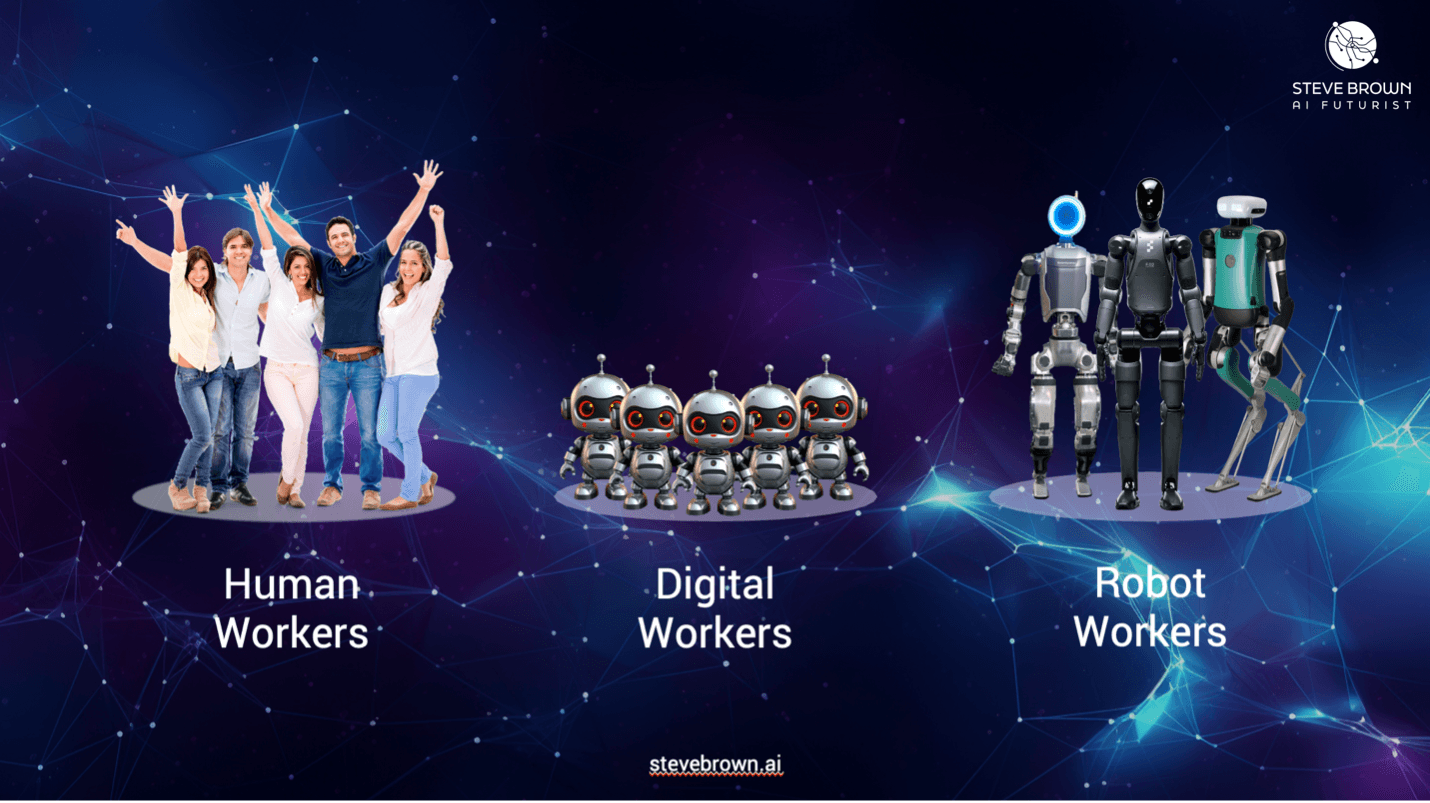
For much of 2024, the buzz was about so-called ‘agentic AI,’ the field of AI in which models have agency, which means they can use tools to complete tasks. Agents will come of age in 2025, and deployments will soon begin at scale. Many have declared this year to be the year of agents. In this post, I’ll review why that’s the case, what types of agents are coming, and the implications for the future of work in 2025 and beyond.

Here are some thoughts on R1, the model that’s got everybody’s panties in a bunch. I’ve written it in simple bullet points to make it easier to consume and easier for me to write quickly. I explore what R1 means for the AI marketplace and how much significance we should give to the moment. Spoiler alert: I think the market’s response on January 27th was a major overreaction.

AI technology continues to improve, often exponentially. It’s evolved from pattern matching, prediction, and recommendation engines to sophisticated agents capable of meaningful conversation and performing reasonably complex tasks. With each advancement, AI inches closer to becoming an integral part of our daily lives, not just as assistants but as researchers and collaborators. The change has enormous implications for users, content creators, advertisers, and the multi-billion-dollar search engine optimization (SEO) business.

Will AI and automation eventually lead to mass unemployment? If AI does most of the work, will people still feel motivated to seek a high-quality education or education of any kind? Will the role of education change in a post-labor world? Could a decline in people’s education use lead to humanity's atrophy? These are some of the questions I plan to explore in this post. My recent posts have been about AI in education. This time, let’s talk about how AI could ultimately change the entire focus of our educational system.

Our education system desperately needs a major overhaul. Today’s system costs way too much, is unavailable to some who need it and doesn’t teach students the skills they will need to succeed in the future workplace. AI in education is about to change that.

If we designed our education system from scratch today, it would look radically different from the antiquated, expensive, slow, and often stuffy system we have. As an AI futurist, I spend time researching and thinking about the future of work, education, and society. The question we must ask ourselves is not only what will happen when we put AI in education but what needs to change in our education system to prepare for AI and society in the future.

Like ice cream, artificial intelligence comes in a variety of flavors. Different people have different favorite flavors of ice cream, and it’s important to choose the right flavor (or flavors) of AI you’ll need to use for your AI business transformation project. Let’s explore the various branches of artificial intelligence and how you might use each to solve real-world business problems.

For a long time, robots were interesting, but boring. They made our cars, shook Petri dishes in science labs, and vacuumed our floors. The promise of robot butlers, companions, and factory workers stayed firmly in the realms of science fiction with lovable characters like C3PO, Rosey, and Robby.

Will humans ever be able to build artificial general intelligence (AGI), AI as intelligent and capable as humans on all tasks? If so, how might we build it? And once we get there, how will we know?
Keynote Speaker.
Understand what AI really means for your business and how to build AI-first organizations. Get expert guidance directly from Steve Brown.