The Anatomy of a Digital Employee
The layers that turn AI capability into autonomy—and technology decisions into leadership decisions
The AI industry has developed an impressive talent for inventing new terminology. Models, model routers, harnesses, agents, digital workers, digital employees—the terms arrive quickly, often overlap one another, and are frequently used by vendors to describe very different things. No wonder business leaders are confused.
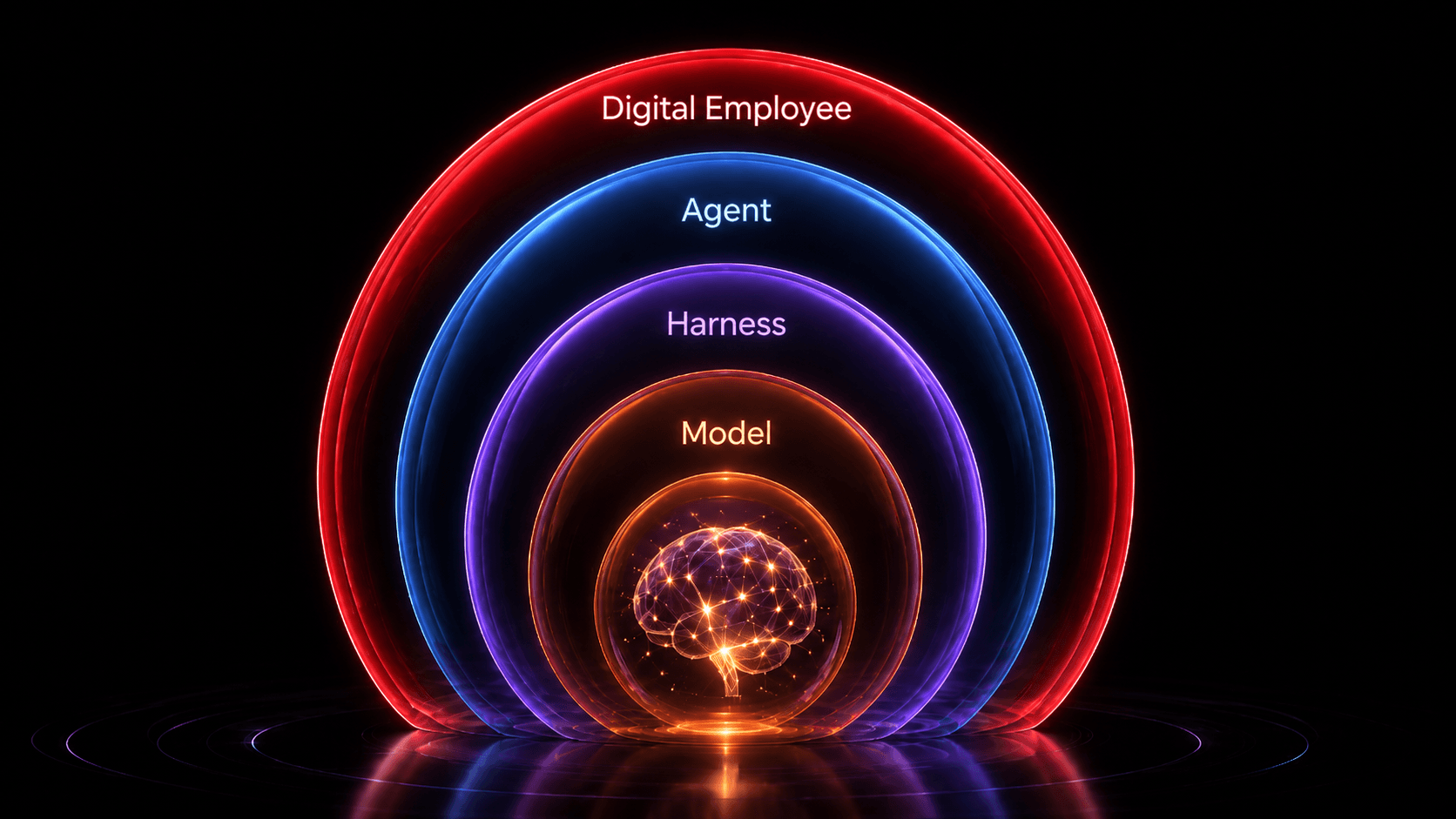
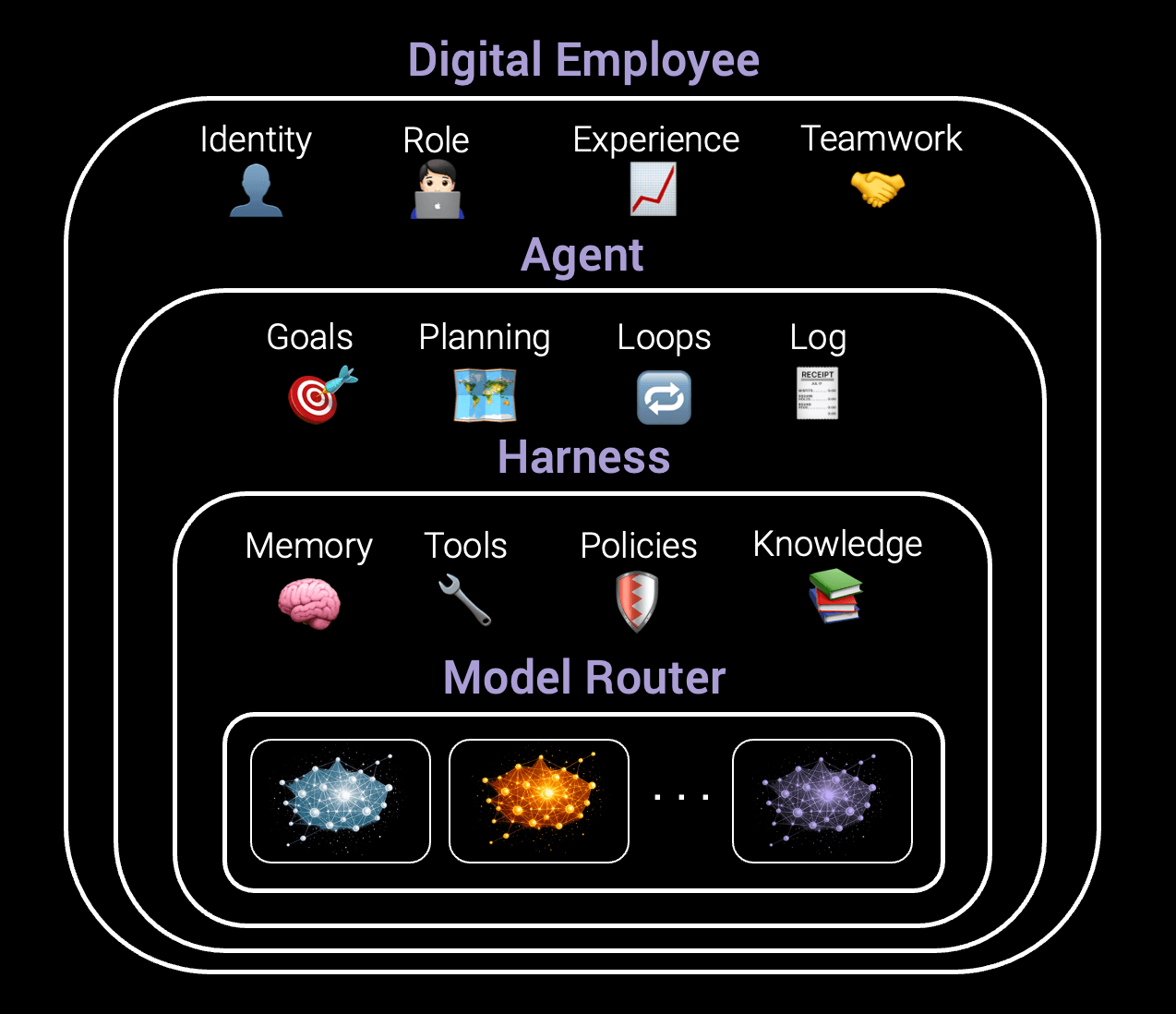
The easiest way I’ve found to explain the architecture is to picture a set of nesting dolls. At the center are AI models. Around them sits a model router. The router operates inside a harness. Add goals, planning, execution loops, and logging, and the system becomes an agent. Add identity, an organizational role, accumulated experience, and the ability to work with others, and we begin to get something resembling a digital employee.
Each new layer contains the capabilities of the layers inside it. Each adds something important and makes the system more useful and consequential. The model supplies intelligence. The router selects intelligence. The harness adds capability. The agent adds autonomy. The digital employee adds organizational context and delegated judgment.
Understanding these distinctions matters because buying access to a powerful model is not the same as deploying a reliable agent. And deploying an agent is certainly not the same as adding a digital employee to your workforce.
The further outward we move through the nested layers, the less the challenge is purely about technology and the more it becomes about management, organizational design, governance, and trust.
Models: Provide raw intelligence
At the center of the architecture is an AI model, or more likely a set of models. Models provide intelligence. They can interpret language, generate content, analyze information, make predictions, recognize images, write software, or reason through a problem.
Different models provide different kinds and levels of intelligence. A frontier model might tackle a complex strategic question. A smaller model might classify documents quickly and cheaply. A predictive model could forecast customer demand or predict equipment failure. A vision model might inspect products for defects. A specialist model might detect fraud.
Think of a model as a brain in a jar. It might know a lot and have extraordinary capabilities, but on its own it can’t do much. It doesn’t have a job, can’t access tools or your systems, has no organizational knowledge, and no authority to act. If you ask it something, it produces an answer, and the interaction ends.
Most companies will probably use many different models The strategic question is how to turn a portfolio of intelligence into a dependable operating capability that performs useful work.
Model Routers: Choose the right intelligence
When an organization uses more than one model, it needs a way to decide which model should handle each task. That is the role of the model router.
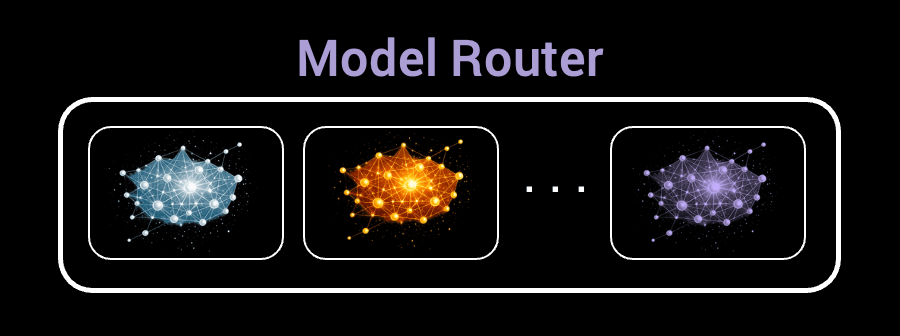
A router examines a request or task and sends it to the most appropriate intelligence. A difficult legal analysis may justify an expensive frontier model. A routine data extraction task might be handled perfectly well by a much smaller model at a fraction of the cost. Work involving sensitive data may need to remain inside the company’s environment. A time-critical application may require an embedded model with almost no latency so it can respond almost instantly.
Think of the router as an efficient dispatcher. It doesn’t drive the ambulance, fire engine, or delivery van. It decides which vehicle should respond.
A good router will consider capability, cost, speed, privacy, availability, and risk. It may check the quality of an answer, switch to another model if the first one fails, or escalate a difficult task to a more capable system. Without routing, companies might be tempted to send every request to the largest model available. That’s the best way to give the CFO a heart attack.
Sending every task to the biggest model would be like hiring a Nobel Prize winner to sort the mail. It’ll work, but it’s an unnecessarily expensive use of intelligence.
The router introduces an important leadership idea: the intelligence portfolio. The goal isn’t to select a favorite AI vendor or model, but to allocate intelligence intelligently, perhaps across multiple vendors and locations (cloud, on-prem, or even on-device).
Harnesses: Add capability
A model can generate an answer, but a harness allows it to operate usefully within a business. The harness surrounds the model and router with four important capabilities: memory, tools, policies, and knowledge.
Memory
Memory allows the system to retain relevant information. It may remember what has happened during a task, retrieve earlier interactions, or preserve useful context between steps.
Tools
Tools allow the system to do things. A tool might search the web, query a database, run a calculation, create a document, update a customer record, send a message, write code to solve a challenge, or operate a piece of software.
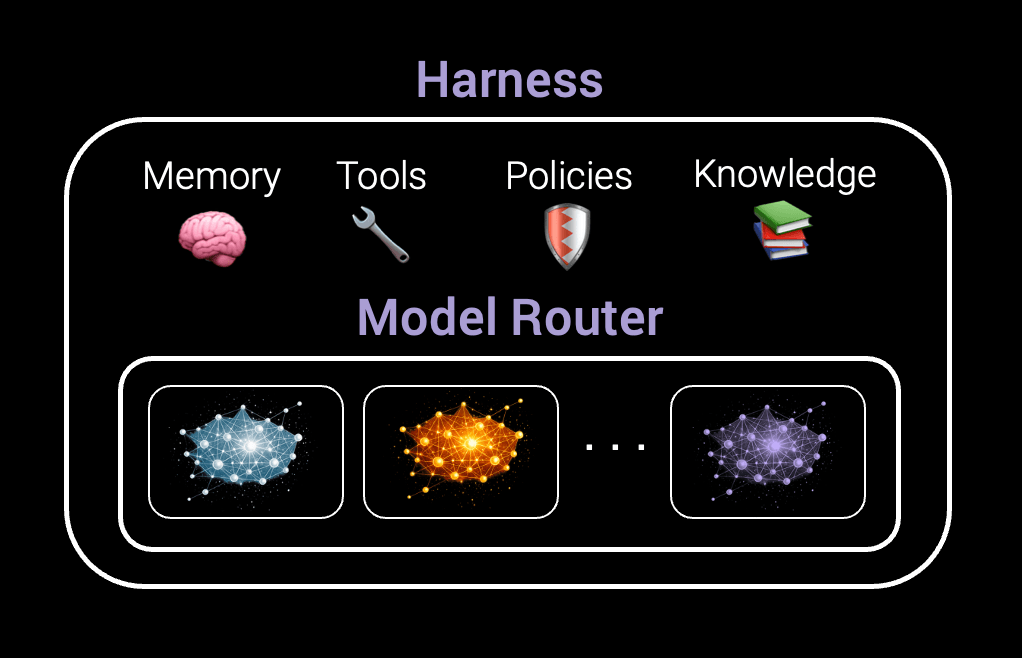
Policies
Policies define the boundaries within which the system must operate. They may specify what information can be accessed, which actions require approval, how customer data must be handled, or when the system must involve a human.
Knowledge
Knowledge connects the system to the organization’s information: for example, product documentation, operating procedures, contracts, research, customer data, technical manuals, and institutional expertise.
Equipping intelligence for work
The harness is a little like equipping a highly capable person for a job. Intelligence alone is not enough. They also need access to information, equipment, procedures, and a record of what has already happened.
Importantly, the harness doesn't give the AI an organizational identity or role. It equips the system to perform work. A contract-review harness might provide access to previous agreements, a library of approved clauses, legal policies, a document-comparison tool, and memory of the current review. Those capabilities could support a person, an agent, or eventually a digital employee.
The harness tells the system how work can be performed. It doesn't yet establish ‘who’ the system is within the organization.
Agents: Add agency
An agent emerges when we add goals, planning, execution loops, and logging around the harness. This is where the system moves from responding to instructions toward autonomously executing a task.
An agent can receive an objective, break it into the steps required, choose and use tools and knowledge available through it’s harness, take actions, observe the results of its actions, adjust its plan, and continue until the work is complete or it needs human help.
From recommendation to execution
Consider the difference between a copilot and an agent.
You might ask a customer-service copilot to draft a message explaining that an order has been delayed. It produces the draft, but a person must still identify the affected customer, check the order, approve the language, send the message, and update the customer record.
An agent could be given the goal of resolving delayed-order cases. It might identify affected customers, check shipment status, review the company’s service policy, generate an appropriate response, send the message within its permissions, update the customer system, and escalate unusual cases. People oversee its operation rather than being in the loop (and slowing it down).
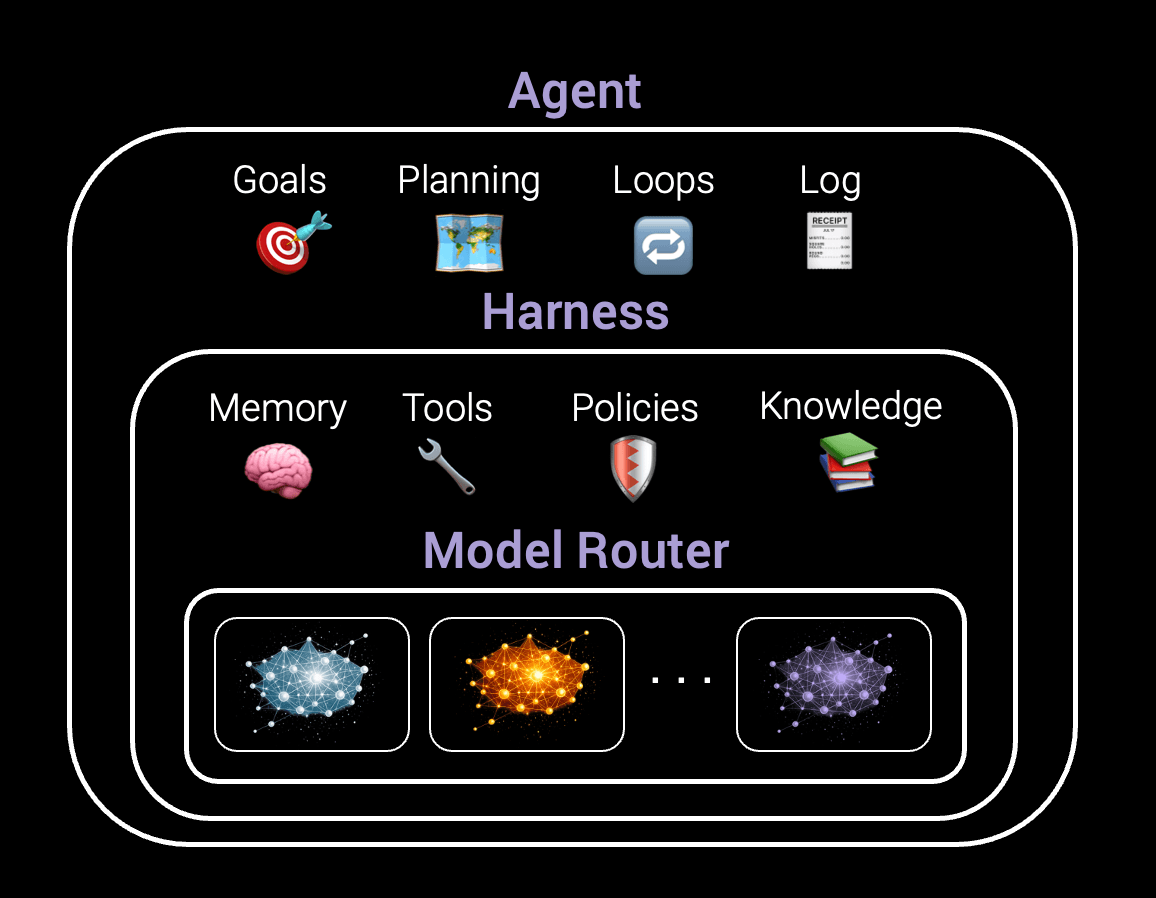
The intelligence comes from the model. The router may select which model to use. The memory, tools, policies, and knowledge come from the harness. What the agent adds is autonomous execution.
The execution loop is especially important. The agent doesn't simply create one plan and blindly follow it. It acts, examines what happened, and decides what to do next. If a customer record is incomplete, it might retrieve more information. If a transaction exceeds its authority, it may request approval. If a tool fails, it might try an alternative.
A log records what the agent planned, which tools it used, what actions it took, and what results it observed. This provides traceability, supports auditing, helps diagnose failures, and may allow the system to be rolled back to an earlier state if needed.
Agents autonomously execute tasks. But they don't necessarily occupy a continuing position within the organization. That brings us to the next layer.
Digital employees: Adds organizational context and an identity
A digital employee is the outer doll. It includes agentic capabilities, but adds the organizational architecture needed to function as a persistent member of a blended workforce: identity, role, experience, and teamwork.
Identity
Identity tmakes the system a recognizable entity. It may have a name, credentials, defined permissions, an operating history, and a clear place within the company’s digital workforce.
Role
Role establishes what the digital employee is there to do. A role includes responsibilities, boundaries, expected outcomes, reporting relationships, and escalation paths. Having spent many years working in HR and trying to define clear roles and responsibilities for my teams, I know how important this step is for leaders to be involved in.
Experience
Experience is more than memory. Memory stores what happened. Experience influences how the system approaches a new situation because of what happened previously.
A database can remember that a customer complained three times. An experienced service specialist recognizes what that pattern means, understands which interventions have worked before, and adjusts their approach accordingly.
Teamwork
Teamwork allows the digital employee to collaborate—with people, other agents, robots, or automated workflows. It might request help, hand work to a specialist, provide updates, negotiate priorities, or contribute to a larger business process.
Agents vs Digital Employees
The definition of these terms continues to evolve and settle in the industry, but an important distinction between agents and digital employees is that digital employees exercise delegated judgment to pursue outcomes. Let’s consider a couple of examples to bring this to life.
An agent might respond to an equipment alert by diagnosing the likely fault and scheduling a repair. A digital reliability specialist might monitor an entire fleet of equipment, weigh the risk of failure against production demands, prioritize maintenance, coordinate technicians and spare parts, track whether repairs solved the underlying problem, and pursue the ongoing outcome of improving uptime without driving maintenance costs through the roof.
An agent might respond to a customer complaint. A digital customer-retention specialist might monitor at-risk accounts, choose appropriate interventions, coordinate with human relationship managers, and pursue the ongoing outcome of reducing preventable churn.
The digital employee therefore operates over a longer horizon and within a defined organizational context.
But the word employee shouldn’t fool us. A digital employee is not a person. It doesn’t possess human judgment, moral agency, legal personhood, or genuine accountability. Its judgment is delegated. Its authority is bounded. Human leaders must remain accountable for its goals, permissions, operating standards, and consequences.
Why the Russian dolls matter
At each layer, something important is added. The models are brains that can think. The router chooses which brain to engage. The harness equips that brain to operate within the business. The agent allows it to take action autonomously. The digital employee gives it a continuing place within the organization. And at every step, leadership becomes more important—not less.
The leadership challenge grows with autonomy
The common mistake is to jump from “we have access to a powerful model” to “we are ready to deploy digital labor.” That is like buying an engine and announcing that you now operate an airline. The engine matters enormously, but so do the aircraft, cockpit, instruments, maintenance systems, flight procedures, control tower, trained crews, and accountable leadership.
The outer layers are where much of the business value will be created. They are also where much of the risk appears.
As systems gain tools, autonomy, identity, and authority, leaders must become much clearer about goals, boundaries, escalation, monitoring, auditability, and ownership. Who defines the role? Who approves the permissions? Who defines standards and what good looks like? Who evaluates performance? When must the system defer to a person? Who is accountable when its actions cause harm? Who provides oversight, and what’s the escalation path when something doesn’t go as planned?
These are leadership questions, not simply questions for the IT department.
Winners will deploy digital employees to build competitive advantage
The companies that win will understand the whole stack. They’ll build portfolios of intelligence, route work to the right models, create robust harnesses, deploy agents inside well-designed workflows, and introduce digital employees only where roles, permissions, accountability, and trust are clear.
The future enterprise won’t run on a single magical AI. It’ll orchestrate a portfolio of intelligence inside harnesses, agents, and digital employees carefully designed for particular types of work.
The model may provide the intelligence. But the surrounding layers determine whether that intelligence becomes a useful capability, a trusted colleague, or a source of chaos.
Steve